
Why Perimenopause Makes Your Emotions Feel Out of Control (and Why You’re Not Losing Your Mind)
By Crystal Lynn Bell
Crying over small things or feeling sudden emotional overwhelm? Perimenopause can disrupt emotional regulation. Learn why it happens—and how to navigate it without shame or self-doubt.
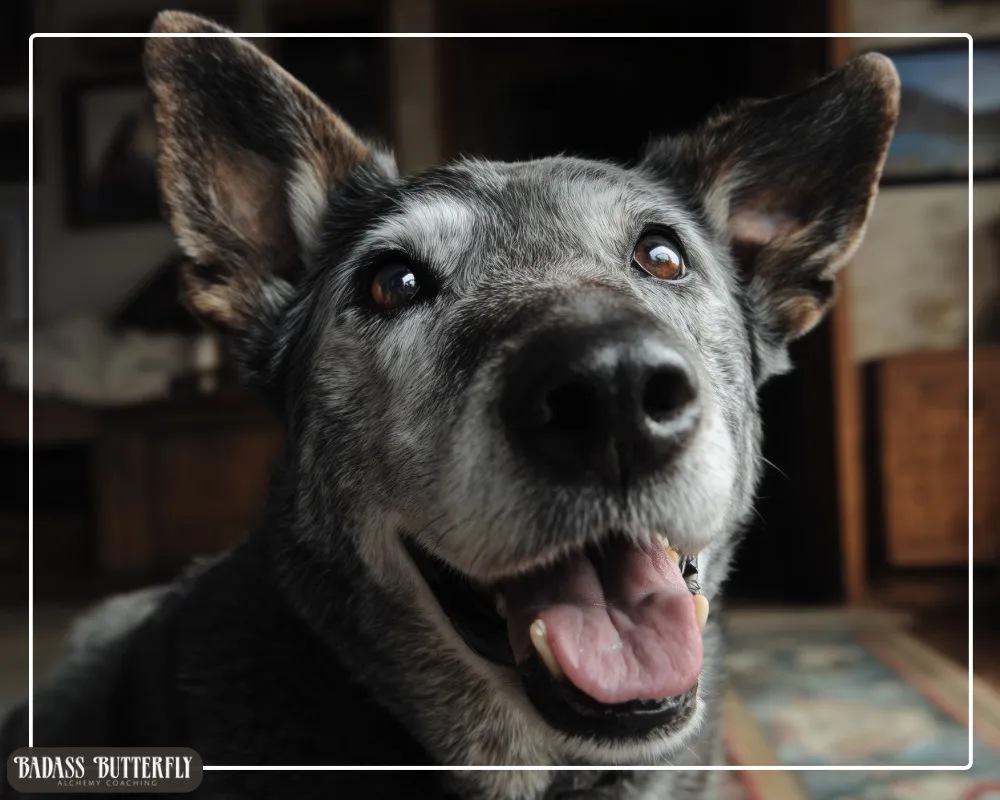
**Why didn’t anybody warn me that perimenopause would make my emotions completely ungovernable? Why did I just weep when I saw an old dog wagging his tail? Soooooo many women in perimenopause have found themselves crying about something that objectively does not warrant tears, or say the’ve had an emotional reaction so disproportionate to what triggered it that they questioned their own sanity. Are they losing their minds? Nope! If this is you, then it’s time to understand that you are experiencing one of the more bewildering aspects of this transition, which is that your emotions no longer respond predictably to the things happening around you. I am not talking about crying over something genuinely sad or difficult. I am talking about crying because a commercial showed a dog waiting for its owner. Or crying because you heard a song from 1987 in the grocery store. Or feeling sudden rage because your husband was chewing too loudly… OH GOSH— one of the kids was banging their spoon against the cereal bowl. OMG. These are real examples. And if you have experienced anything like this, you know that the emotion itself feels completely real and overwhelming in the moment, even though the rational part of your brain is standing there saying this does not make sense. The medical explanation for this is that declining estrogen and progesterone affect your neurotransmitters, particularly serotonin, which regulates mood and emotional stability. When those hormones fluctuate, your emotional regulation becomes less stable. You have less buffer between stimulus and response. Things that would normally roll off your back hit you harder. The things that would normally make you mildly sad make you completely undone. This explanation is accurate. But it does not quite capture the experience of standing in the produce section of the grocery store sobbing because they were out of the specific apple variety you wanted. The conventional advice for managing emotional volatility in perimenopause is to practice stress management techniques, get regular exercise, maintain good sleep hygiene, and consider medication if the mood swings are severe enough to interfere with your daily functioning. And all of that will help to some degree. But what that advice does not address is the part where you feel completely insane because you are having a breakdown over something that objectively does not matter. In addition to crying over the old dog, I cried last week because I could not find my Bic 4-color pen. It ain’t a special pen with sentimental value. It’s just a regular old pen that I like using because I like to click the color buttons. I looked for it for maybe three minutes, could not find it, and then sat down at my desk and cried. And while I was crying, part of my brain was saying this is ridiculous, it is just a pen, you have pink, green, and purple gel pens, why are you crying! But the tears kept coming anyway. And then five minutes later I was fine. The pen did not matter anymore. The emotional storm had passed. And I was left sitting there feeling vaguely embarrassed about the fact that I had just cried over a pen. I jokingly said once that these eruptions of tears were my eyes hot flashing. It was kinda true— my emotions were hot flashing. This is what emotional volatility in perimenopause often looks like. It is not that you are sad all the time or that everything makes you cry. It is that your emotions spike suddenly and intensely over things that do not warrant that level of response, and then they pass just as suddenly, leaving you feeling confused about what just happened. The problem with this is not just that it is uncomfortable. The problem is that it makes you feel out of control. You cannot trust your own emotional responses anymore because they do not match the situation. You start second-guessing yourself. You start feeling crazy. You start isolating because you do not want other people to witness you having a breakdown over something as minor as a misplaced pen or a sad commercial. When I work with women who are experiencing emotional volatility, we talk about what is happening neurologically and hormonally so that they understand why this is occurring. But we also talk about the fact that even though the trigger does not make sense, the emotion itself is real. You are not making it up. You are not being dramatic. Your body is genuinely experiencing that emotion in that moment, even if the trigger is objectively trivial. And once you understand that, you can stop beating yourself up for having emotions that do not make sense and start just allowing them to move through you without attaching so much meaning to them. Because here is what I have observed. The women who handle emotional volatility best are NOT the ones who never have disproportionate emotional reactions. They are the ones who can have the reaction, recognize that it does not make sense, and just let it pass without spiraling into shame or self-judgment about it.**
** They can cry over the commercial about the dog and then laugh about it five minutes later. They can feel sudden rage at someone chewing and recognize that the rage is not actually about the chewing. They can have the emotion without making it mean something catastrophic about their mental state. This is not about suppressing the emotions or pretending they are not happening. This is about not attaching a story to them. The emotion is happening. It is real. But it does not mean you are broken or crazy or FAILING. It just means your neurotransmitters are fluctuating and your emotional regulation is temporarily less stable than it used to be. And honestly, there is something almost funny about it in retrospect. When you are in the middle of crying over a pen, it does not feel funny. But later, when you can look back at it with some distance, there is a genuine absurdity to the whole thing. You cried over a pen. A song from 1987 broke you open in the frozen food aisle. A commercial about a dog got you for twenty whole minutes. The ability to laugh about it later is a sign that you are not taking it too seriously. And not taking it too seriously is what keeps you from spiraling into shame and isolation. What I have also observed is that emotional volatility tends to decrease as women move through perimenopause and as we address the underlying stress, nervous system dysregulation, and suppressed emotions that make the volatility worse. But even while it is still happening, the shift in how you relate to it makes a huge difference. Most women I work with start to see this shift within the first few weeks. Not that the emotional spikes stop happening, but that they stop feeling so destabilizing. They can have the emotion, let it pass, and move on without making it mean something terrible about themselves. They stop feeling crazy and start feeling like they are just navigating a temporary phase of neurological recalibration. In my 12-month program, learning to work with your emotional volatility instead of fighting it or feeling ashamed of it is part of how I help spiritually-aware women move from feeling powerless and invisible to becoming sovereign women who have stabilized their bodies and minds, authored their own stories, and claimed ownership of their dreams. We also work on grounding yourself when you feel scattered, reclaiming your voice and learning to say no without guilt, clarifying the vision your soul is calling you toward, bringing that vision into the world as work that sustains you, and building sustainable income from your wisdom. If you are tired of feeling crazy because your emotions do not make sense anymore and you are ready to stop attaching shame to something that is just a temporary neurological phase, send me a private message with the word “interested” and we will talk about whether this program is the right fit for you.**